Ag Metrics Group

  • Ag Contract Research
    • Agronomy
    • Biologicals
    • Biostimulants
    • Entomology
    • Genomics
    • Nematology
    • Plant Pathology
    • Precision Agriculture
  • Facilities
    • Pacific Ag Research
    • Florida Ag Research
    • Michigan Ag Research
  • Crops Studied
    • Almond
    • Banana
    • Brassica
    • Citrus
    • Corn
    • Cucurbit
    • Grape
    • Leafy Greens
    • Soybean
    • Strawberry
    • Tomato
  • About
    • About Ag Metrics Group
    • Our Team
    • LATAM Developers Services
    • Asia Pacific Developers Services
    • European Developers Services
  • News & Updates
  • Contact
  • Ag Contract Research
    • Agronomy
    • Biologicals
    • Biostimulants
    • Entomology
    • Genomics
    • Nematology
    • Plant Pathology
    • Precision Agriculture
  • Facilities
    • Pacific Ag Research
    • Florida Ag Research
    • Michigan Ag Research
  • Crops Studied
    • Almond
    • Banana
    • Brassica
    • Citrus
    • Corn
    • Cucurbit
    • Grape
    • Leafy Greens
    • Soybean
    • Strawberry
    • Tomato
  • About
    • About Ag Metrics Group
    • Our Team
    • LATAM Developers Services
    • Asia Pacific Developers Services
    • European Developers Services
  • News & Updates
  • Contact

News & Updates

Downy Mildew Field Trials on California’s Central Coast (Fall–Winter)

11/13/2025

 
Downy Mildew Field Trials on California's Central Coast - Pacific Ag Research / Ag Metrics Group
Why now: From ​November–March, cool, moisture-rich conditions on the Central Coast reliably drive downy mildew—ideal for generating credible efficacy data on real farms.
Quick Specs
  • Crops/Hosts: Lettuce, brassicas (e.g., broccoli/cauliflower), onions
  • Region & Sites: California Central Coast (cooperating commercial fields)
  • Windows: Setup ​Nov–Dec
  • Design Options: RCBD/split-plot; 3–4 reps typical; plot sizes scaled to crop
  • Endpoints: Incidence, severity, AUDPC, marketability/trim loss, phytotoxicity
  • Deliverables: Clean data package, summaries, and photo log; optional demo-plot visuals
Application in Downy Meals Trials on California's Central Coast - Pacific Ag Research / Ag Metrics Group
Applications for Downy Mildew Field Trials - Pacific Ag Research / Ag Metrics Group
Why the Central Coast Works
  • Consistent pressure. Seasonal moisture + cool temps promote predictable disease development.
  • Field-relevant context. Cooperating commercial farms ensure practical conditions and decision-grade data.

Trial Formats (Pick What Fits Your Stage)

1) Stand-Alone Trials
​
For later-stage decisions and label-supporting evidence.
  • Full protocol control (rates, timings, MOA rotations)
  • Custom design and expanded endpoints
  • Robust analysis package for internal milestones

2) Add-On Trials
For early signals or cost-efficient comparisons.
  • Insert a single treatment into an existing program
  • Shared controls (UTC and grower standard)
  • Faster setup and lower cost to learn

​What You Can Expect
  • Precision field execution and standardized ratings
  • Transparent timelines aligned to the fall–winter cycle
  • Actionable analysis, including figures/tables you can lift into internal decks

Next Steps (Windows Are Limited)
  • Send your draft protocol for a 48-hour feasibility check
  • Hold a plot slot for your preferred window (Nov–Dec setup)
  • Decide format: Stand-Alone vs. Add-On based on your objectives

Request availability & protocol review
Contact Brad Booker at [email protected] or (805) 471-0537 or through our website

Winter Greenhouse Assays at Michigan Ag Research: SCN & SDS on Soybean

10/29/2025

 
Picture
​Summary: Michigan Ag Research is accepting projects for winter greenhouse (GH) assays targeting Soybean Cyst Nematode (SCN) and Sudden Death Syndrome (SDS). These controlled studies help product developers and breeders generate decision-ready data before field season.
Why winter GH assays?
Greenhouse assays provide tight environmental control and reliable pathogen/nematode pressure, enabling rapid iteration on formulations, rates, and placements. Running in winter means you can refine programs now and head into spring trials with greater confidence.
What we offer

SCN assays (Heterodera glycines)
  • Standard reproduction assays (eggs/females per root system)
  • Variety resistance screens and product efficacy comparisons
Picture
SDS assays (commonly Fusarium virguliforme)
  • Inoculated disease pressure with consistent symptom expression
  • Foliar severity, root necrosis ratings, vigor, and area-under-disease-progress (AUDPC)
Picture
Study design & execution
  • Protocol development aligned to your objectives
  • Randomized, replicated designs; positive/negative controls
  • Validated inoculum and QC checkpoints

Data & reporting
  • Interim updates with photos
  • Final report with stats (ANOVA, mean separation) and visuals suitable for internal decks or investor updates

Typical timelines
  • Protocol lock-in: 1–2 weeks from kick-off
  • Assay run: ~6–10 weeks depending on endpoint
  • Report delivery: within 1–2 weeks after last rating

Best-fit use cases
  • Seed treatments, biologicals, and chemistries in lead selection
  • Rate optimization prior to field testing
  • Variety resistance characterization and ranking
 
Get started
Tell us your target pest/disease, product class, endpoints, and timeline. We’ll propose a right-sized design with sample sizes, controls, and reporting milestones.
 
Michigan Ag Research (Albion, MI) Contact:
Brian Cortright at (517) 857-2676
[email protected]

FAQs: Winter Greenhouse Assays for Soybean (SCN & SDS)

  1. What problems can you test this winter?
    Soybean Cyst Nematode (SCN) and Sudden Death Syndrome (SDS) in controlled greenhouse conditions.

  2. What endpoints do you measure?
    SCN: eggs/females per root system, root mass.
    SDS: foliar severity and incidence, root necrosis, vigor/biomass, AUDPC.

  3. What is AUDPC and why use it?
    A single metric summarizing disease over time; it captures both severity and duration—ideal for comparing treatments or varieties.

  4. What products/solutions fit these assays?
    Seed treatments, biologicals, chemistries, coatings, and variety resistance screens (early down-selection, rate finding, or head-to-head comparisons).

  5. What organism do you use for SDS?
    Typically Fusarium virguliforme under standardized inoculation to produce consistent symptom expression.

  6. How long does a study take?
    Most GH assays run ~6–10 weeks depending on endpoints, plus 1–2 weeks for the final report.

  7. How are studies designed?
    Randomized, replicated designs with appropriate controls (untreated, grower standard, positive checks).

  8. What do I need to provide to kick off?
    Your objectives, target endpoints, product class, desired comparisons, timing constraints, and sample material (seed/treatments).

  9. What do I receive at the end?
    A report with methods, QC notes, statistics (e.g., ANOVA with mean separation), tables/graphs, raw data files (CSV/XLSX), and photo documentation. Interim photo/status updates available.

  10. Can you fast-track for internal gates or investor updates?
    Yes—ask for a milestone schedule with interim summaries suitable for slide decks.

  11. Do you support blinded or coded samples?
    Absolutely. We can maintain blind codes throughout data collection/analysis on request.

  12. How much material do you need?
    Varies by design; typical ranges are 200–1,000+ seeds per treatment for replicated assays. We’ll specify exact amounts in the protocol.

  13. Can results inform 2026 field trials?
    Yes—GH outputs help rank treatments, rates, and varieties to sharpen your field plan and reduce weak entries.

  14. Data ownership and confidentiality?
    All sponsor-generated data belong to you under our standard CDA/SOW. We do not share or publish without written permission.

  15. Biosecurity & QC—what safeguards are in place?
    Validated inoculum, documented handling, sanitation protocols, check treatments, and pre-defined QC acceptance criteria.

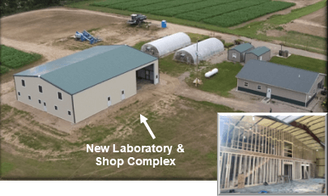
Michigan Ag Research Announces Winter Bioassay Capacity in New Laboratory Facilities

10/25/2025

 
Michigan Ag Research Now Booking Fall & Winter Bioassays
Albion, Michigan - October 25, 2025​. Michigan Ag Research is opening winter bioassay capacity in our new laboratory facilities with access to heated greenhouses, enabling rapid screening, rate determination, and protocol refinement ahead of spring field programs. Sponsors can secure data in as little as 3 weeks from trial initiation (program dependent).
Beyond standard assays, we routinely develop and customize bioassay protocols to match sponsor goals—especially helpful for smaller organizations that want guidance on study design, intake, and analysis.
Why Winter Bioassays
Winter bioassays allow R&D teams to triage candidates, confirm dose–response and effective rates, and streamline decisions before large-scale field trials. By answering key questions under controlled laboratory conditions, only the most promising products advance to greenhouse or field.

Protocol development & customization (for sponsors who want guidance)

We translate your goals into a tight, testable plan:
  1. Clarify decision criteria and convert them to measurable endpoints
  2. Propose rate ranges, replication, and observation intervals
  3. Draft or adapt SOP-level methods (e.g., application technique, handling, reads)
  4. Provide intake checklists (samples, SDS, labeling) and reporting templates
  5. Align timelines to your go/no-go dates; deliver decision-grade data in ~3 weeks (program dependent)

Assay Platforms & Formats
  1. Diet incorporation, detached-leaf, and leaf-disk bioassays
  2. Conducted under controlled laboratory conditions to support repeatability and statistical power
  3. Access to many common insect species (availability confirmed at scheduling)
  4. We can design or customize bioassay protocols to suit specific research goals​
Laboratory Features
  1. Dedicated growth chambers for controlled environmental conditions
  2. Modern laboratory infrastructure for precise application and assessments (e.g., micropipettes, Potter spray tower, custom boom sprayers)
  3. Capacity to run multiple concurrent studies
  4. Custom rearing options for any insect life stage
Picture
Heated Greenhouses for Step-Up Work
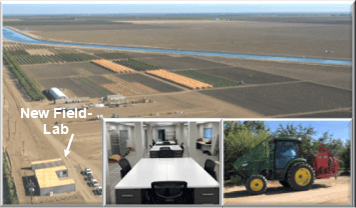
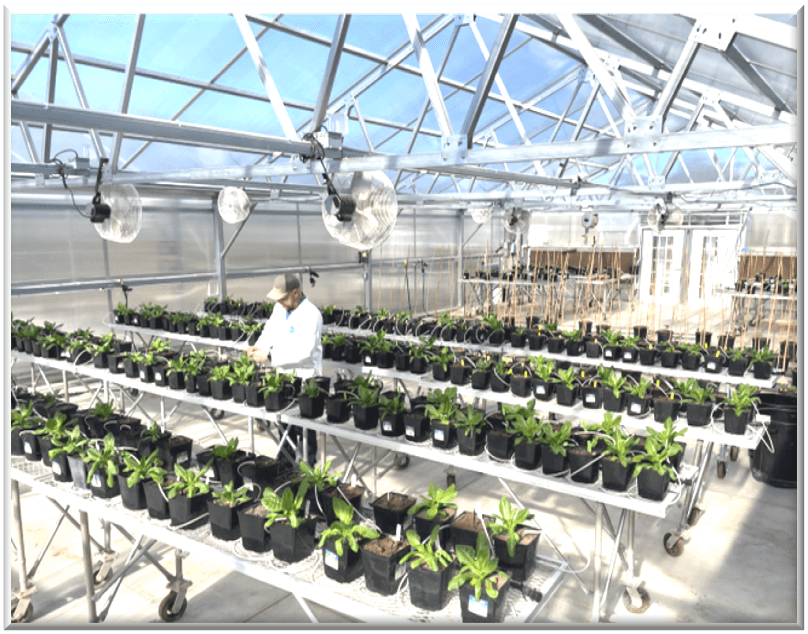
Michigan Ag Research’s heated greenhouses support larger-scale confirmations and plant production for laboratory assays, creating a smooth progression from lab → greenhouse → field as needed.

Turnaround & Scheduling
  • Rapid timelines: decision-grade data in as little as ~3 weeks after trial initiation (program dependent)
  • Rolling starts: the winter calendar is now open; start windows are assigned on a first-come basis

Typical Study Designs & Endpoints
  • Rate–response series (4–6 rates plus control)
  • Head-to-head candidate comparisons with internal standards
  • Screening funnels: broad screen → confirmatory follow-up
  • Common endpoints: corrected mortality, feeding inhibition, injury scores; optional knockdown, residual activity, and phytotoxicity notes

Reporting & Deliverables
Sponsors receive a methods summary, raw data, tables/figures, and statistics (e.g., ANOVA/GLM with post-hoc tests), plus an executive summary that recommends rates and next steps.

How to Engage
  1. Share targets and objectives (species, crop/host, assay format, endpoints, timelines).
  2. Receive a design & quote aligned to your decision criteria.
  3. Reserve a start window and ship materials per intake guidance.
  4. Review interim reads (as applicable) and a final report with recommendations.

​Reserve Your Winter Start Window
​Winter start windows are now being assigned.

Michigan Ag Research (Albion, MI) Contact:
Brian Cortright at (517) 857-2676
[email protected]

Matt Hiles at (989) 860-5992
[email protected]

FAQ

What types of winter bioassays can you run?
Diet, detached-leaf, and leaf-disk formats under controlled laboratory conditions, with access to many common insect species; including topical and precision applications and exclusion assays.

How fast can I get results?
Programs can deliver data in as little as 3 weeks from trial initiation, depending on design and endpoints.

Can studies transition to greenhouse or field?
Yes. Heated greenhouses support step-up work and plant production, and studies can progress to field as appropriate.

What study designs are typical?
Rate–response series, head-to-head candidate comparisons, and staged screening funnels with confirmatory follow-ups.

What’s included in the report?
Methods, raw data, summary tables/figures, statistics, and an executive summary with rate recommendations and next steps.

New Data: Eco-Friendly Approach to HLB Shows 63% Disease Reduction in Florida Trials

10/12/2025

 
Ag Metrics Group - Tanishka Aglave and Balaji Aglave
Tanishka Aglave, a student at Strawberry Crest High School and daughter of Dr. Balaji Aglave, Research Director at Florida Ag Research, was awarded the 2025 President’s Environmental Youth Award (PEYA) by the U.S. Environmental Protection Agency for a new approach to managing Citrus Greening Disease (Huanglongbing, HLB)
At Florida Ag Research, we are proud to support the next generation of scientists whose work is shaping the future of agriculture. That commitment was recently recognized nationally when Tanishka Aglave, daughter of our Research Director Dr. Balaji Aglave, received the ​2025 President’s Environmental Youth Award (PEYA) from the U.S. Environmental Protection Agency.

Her project, “Reviving Citrus, Reviving Florida,” explored an eco-friendly solution to Citrus Greening Disease (Huanglongbing, HLB) — the bacterial disease that has devastated Florida’s citrus industry. The work was carried out in Florida Ag Research’s laboratories and groves in Thonotosassa, underscoring the role our facilities play in advancing field-based science.

Promising Results for Growers
Using qPCR diagnostics, chlorophyll analysis, gas exchange measurements, and regression modeling, Tanishka’s trials demonstrated a 63% reduction in disease severity and a 95% improvement in plant vigor with a biological formulation derived from curry leaf extract (Murraya koenigii).

Research showed that this formulation could be used on its own or rotated with oxytetracycline, offering growers both a cost-effective and sustainable tool for HLB management.

Beyond the Science
The project extended well beyond the research plots. Tanishka partnered with the Citrus Research and Development Foundation’s Grove-First initiative, worked alongside USDA scientists and citrus growers, delivered presentations at grower meetings, and authored a children’s book, The Story of Oranges, to raise awareness about citrus health with younger audiences.

In Their Words
​“This recognition is a reflection of the scientists who inspired and guided me. I am deeply grateful to the Florida Ag Research team and to Dr. Frank V. Sances, President & CEO of Ag Metrics Group, for providing the scientific foundation that enabled me to contribute to the fight against Citrus Greening.” — Tanishka Aglave
“As a scientist, I am proud of the rigor behind Tanishka’s work. By applying qPCR diagnostics and precision crop physiology tools, she demonstrated a viable eco-friendly alternative to synthetic antibiotics for HLB management. As a father, it is rewarding to see her pursue this work with passion and commitment.” — Dr. Balaji Aglave, Research Director, Florida Ag Research
Supporting Future Innovation​
​
HLB remains one of the most pressing challenges in Florida agriculture. By providing facilities, mentorship, and scientific expertise, 
Florida Ag Research is proud to play a role in supporting the young scientists whose ideas and innovation will help safeguard the future of citrus.
For more information about the research results, please contact Florida Ag Research at ​https://www.agmetricsgroup.com/contact  Read the full press release here: 
Ag Metrics Group Congratulates Tanishka Aglave for Award-Winning Research on Eco-Friendly Citrus Greening Disease Management
File Size: 563 kb
File Type: pdf
Download File

BEYOND THIRAM: New Fungicide Efficacy Testing, Fungicide Resistance Monitoring, and Germplasm Disease Phenotyping

10/9/2025

 
Picture
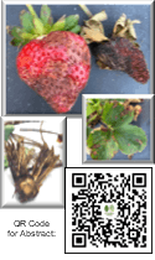
As regulatory uncertainty surrounds the future registration of the widely used fungicide Thiram, crop production in Florida and throughout the Southeastern U.S. faces a critical need for alternative disease management tools. Nowhere is this need greater than with strawberries, where Thiram is relied upon heavily for management of Neopestalotiopsis. Thiram has also been an important fungicide and resistance management component across many other Southeastern crops, including tomatoes, cucurbits, peppers, eggplant, and ornamentals—all of which require proactive research in light of this regulatory change.

Our integrated program emphasizes:
  • Fungicide Alternatives: Rigorous field evaluation of registered and experimental chemistries exhibiting broad-spectrum activity against foliar and fruit pathogens across multiple specialty crops.
  • Fungicide Resistance Testing: Monitoring of resistance in currently used chemistries through statewide field collections.
  • Disease Resistance Screening: Advanced screening of germplasm for resilience under Florida’s unique subtropical pressures, including Botrytis cinerea, powdery mildew, and Neopestalotiopsis.

Leveraging over 45 years of plant pathology expertise, Florida Ag Research and the Ag Metrics Group companies combine proven field protocols with precise laboratory bioassays to deliver statistically validated efficacy data.

This ensures product developers can confidently assess performance, spectrum of activity, and potential integration into Florida’s commercial and export-driven systems.

We welcome inquiries from product developers interested in advancing next-generation disease management solutions across multiple Southeastern specialty crops.

Connect with our team: https://www.agmetricsgroup.com/contact.html?utm_source=linkedin&utm_medium=organic&utm_campaign=strawberryneopesta

#FloridaAgResearch #StrawberryResearch #FungicideTrials #DiseaseManagement #PlantPathology #CropProtection #AgInnovation #SpecialtyCrops #AgResearch #SustainableAg

New Opportunities for Sugarcane Ripener Trials

10/3/2025

 
Picture
Florida Ag Research is expanding the research portfolio with dedicated field trials evaluating ripener programs in sugarcane. These studies are designed to quantify the effects on sugar content at harvest, reductions in lodging and improve plant size and stem girth.

Ripener evaluation protocols will measure:
  • Sugar Content and Maturity: Brix level, polarity, and sucrose concentration
  • Agronomic impacts: Lodging reduction, plant size and stem girth
  • Yield: Tonnage per acre and overall production value

​Trials incorporate standardized sampling and laboratory analysis to accurately estimate the production value.

Florida Ag Research has the capability to apply ripeners with precision while capturing detailed physiological and yield response. Our team utilizes both field-based ratings and laboratory quality analyses to provide comprehensive insights for product developers.

Florida Ag Research Announces Biostimulant Focused Field Trials in Strawberries

9/26/2025

 
Picture
Florida Ag Research is launching a dedicated research program evaluating the efficacy of biostimulants in Central Florida strawberry production. Candidate products will be field assessed in small plot trials and larger demo plots for marketing support in the heart of the Southeast strawberry growing region.

Biostimulant evaluation protocols will measure improvements in:
  • Plant growth and vigor: early crop establishment, canopy development, root and shoot biomass, and selected pest tolerance.
  • Fruit quality: earliness, berry size, color, shelf life, and total yields.
These investigations will detail effects of application rate, phenological timing, soil or foliar treatment, and almost any other specific product usage scenario for the manufacturer.

Using your protocol or ours, these studies begin at planting in October and continue through the fruiting season ending in March 2026. Plant growth rates, root development, flowering, and fruiting parameters are recorded on populations of treated plants compared to untreated ones. Complete materials and methods, statistical and graphical presentation of data, and interpretation of results are provided in the final report.

Florida Ag Research has the capability to apply biostimulant products as a soil amendment, chemigation application, or foliar spray. To capture physiological responses, our trials incorporate advanced measurement tools including the LI-COR® LI-600 Chlorophyll Content Index sensor, NDVI/NDRE sensors, WinRHIZO™ root scanner, and experienced field technicians familiar with strawberry quality standards and measurement. These technologies and staff allow us to quantify crop growth patterns, stress response, and canopy health with repeatable precision.

We welcome inquiries from product developers and invite you to connect with our team for more information on our biostimulant program. ​

New Chilli Thrips Ovicidal Efficacy Program Announced

9/24/2025

 
Chilli Thrip Ovicidal Trials
Florida Ag Research announced a new insecticide screening program for testing ovicidal efficacy against Chilli Thrips for the Florida strawberry industry. Candidate active ingredients include currently registered and new insecticides, acaricides, or other products that can disrupt the pest early in its life cycle. This Fall and continuing through Spring 2026, our Florida entomology team will be conducting focused laboratory and field bioassays that can provide manufacturers with confidential data of a product’s potential utility as a thrips ovicide.

As with other thrips species, Chilli Thrips (Scirtothrips dorsalis) inserts its eggs into leaf tissue where they are protected against most insecticide sprays and biological controls. In this scenario, new larvae continually hatch unchecked, infesting plant canopies and causing direct damage to the harvested crop. In contrast, ovicides strengthen commercial control programs by eliminating a critical pest life stage, which may lead to a reduction in the number of thrips sprays needed, conservation of biological controls, and improvement in resistance management (longevity) of products now in use.

In addition to Chilli Thrips, ovicidal efficacy testing is also available for Western Flower Thrips (Frankliniella occidentalis) and several other key insect pests.

Florida Ag Research combines state-of-the-art facilities with decades of expertise in entomology, greenhouse and field research, and custom bioassay designs. Our mission is to deliver independent, science-driven insights that manufacturers of ag products can use to refine their portfolios and ultimately contribute to commercial IPM strategies worldwide.

Chilli Thrips Control in Strawberry: Comparison of Conventional and Organic Treatment Efficacy

5/13/2025

 
1 F.V. Sances, 2 B. Aglave, 2 K. Williams, 2 C. Brown, 3 S. Lahiri (Collaboration)​;  
1 Ag Metrics Group, 2 Florida Ag Research, 3 UF-GCREC


Contact: 
Frank Sances: [email protected]
Balaji Aglave: [email protected]
Florida Ag Research
3001 Kingsway Rd.
Thonotosassa, FL. 33592
Picture
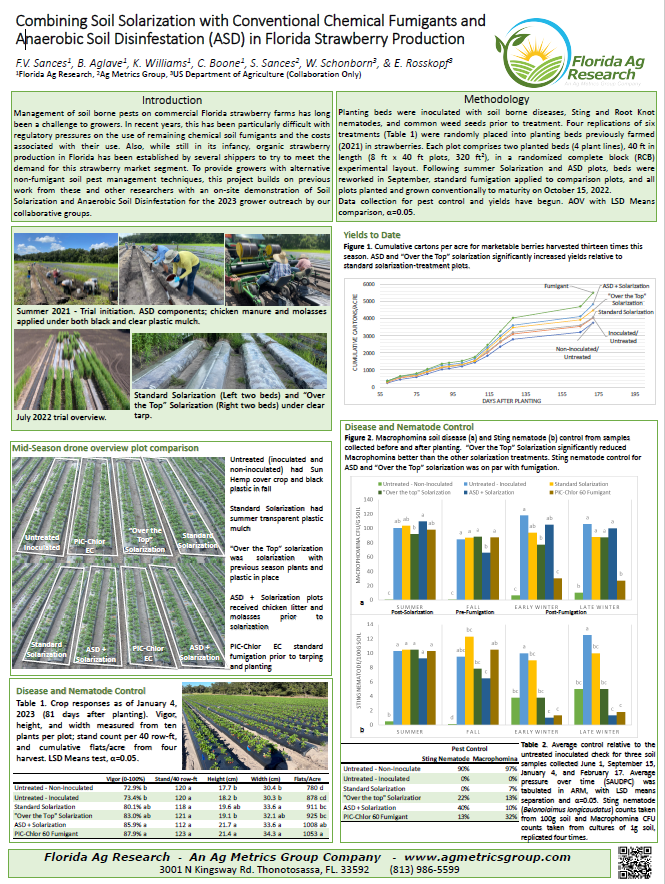
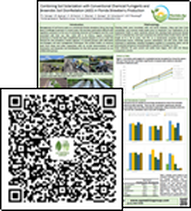
Click Poster to Download
Justification: Chilli thrips are increasing in severity and distribution in Florida’s strawberry industry every year, and reports of severe crop injury are commonplace in all strawberry production districts statewide. In warm fall years, Chilli thrips can become established in strawberry plantings during plant setting periods of overhead irrigations when foliar insecticide spray applications are not possible. Within the first trimester of the crop, most strawberry plantings are infested with rapidly increasing populations of these pests, with injury to foliage, blossoms and fruit evident by mid-season.

​This occurs despite
repeated insecticide sprays or inundative releases of hundreds of thousands of predatory mites and/or beneficial insects. One strategy proposed is to apply insecticides (conventional or organically approved) as early as possible before plant canopies are established and spray coverage limits control. If insecticide materials could be used during the first month of crop establishment, thrips populations could be delayed, and plant damage minimized later in the season. This project seeks to test insecticide application methodologies during the critical crop establishment period under actual field conditions at the Dover lab.
​Photo 1. Close up of Chilli Thrips (Scirtothrips dorsalis) on strawberry leaf (left) and the feeding damage on infested strawberries rated a 5 on a 0-5 scale (right)
Methodology: Three experiments were carried out on naturally infested Brilliance strawberries transplanted in October 2024 at the Dover research station. All three experiments include untreated check plots and a grower standard foliar insecticide rotation. ​
  1. Pre-Plant Conventional + Organic – Transplant dips and at plant into planting hole​
  2. Post-Plant Conventional – Drip applied (minimal water), overhead sprinkler, night spray​
  3. Post-Plant Organic – Drip applied, overhead sprinkler, night spray​
​
​Treatments: ​
Conventional systemic insecticides​
  1. Abamectin (plant dip, starter, drip, overhead, night spray)​
  2. Cyantranilprole (plant dip, starter, drip, overhead, spray)​
  3. Imidacloprid (plant dip, starter, drip, overhead, night spray)​
  4. Acetamiprid (plant dip, starter, drip, overhead, night spray)​

Organic products (1-2 applications)​
  1. Azadirachtin (plant dip, starter, drip, overhead, spray)​
  2. Entomophagous nematodes  (overhead, night spray)​
  3. Capsicum oleoresin (overhead, night spray)​
  4. Beauveria bassiana (overhead, night spray)​
  5. Pyrethrum/Azadirachtin (overhead, night spray)​

​Data Collection
: Thrips counts on ten blossoms per plot were reported weekly. Feeding damage on fruit was rated on a 0-5 scale, where 5 is severely damaged (see photo 1).​

Early Season Chilli Thrips Counts* on Flowers

Pre-Plant dips for Cyantranilprole and Imidacloprid had the fewest thrips on flowers in the pre-plant conventional program.
Post-plant Conventional treated strawberries saw the fewest Chilli thrips on standard tank mix program.
Strawberry blossoms treated with experimental organic programs saw higher average Chilli Thrips than the standard and untreated plants.
*Time weighted average count, six week total pressure. Larvae, adult and combined counts analyzed separately

Average Fruit Damage % Control

Chilli Thrips feeding damage rating scale
Pre-Plant -  % Control Fruit Damage: Imidacloprid as a Preplant Dip controls fruit damage better than standard, statistically (p<0.05)
Pre-Plant: Imidacloprid as a Preplant Dip controls fruit damage better than standard, statistically (p<0.05)
Post-Plant- % Control Fruit Damage: Night sprays were significantly less effective than sprinkler or drip applications for experimental treatments (p<0.05)
Post-Plant: Night sprays were significantly less effective than sprinkler or drip applications for experimental treatments (p<0.05)
Organic - % Control Fruit Damage: No significant differences for standard rotation or experimentals
Organic: No significant differences for standard rotation or experimentals
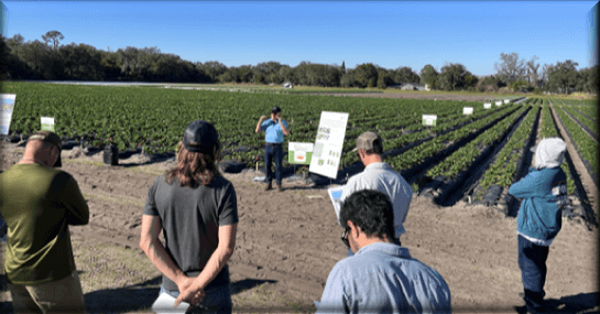
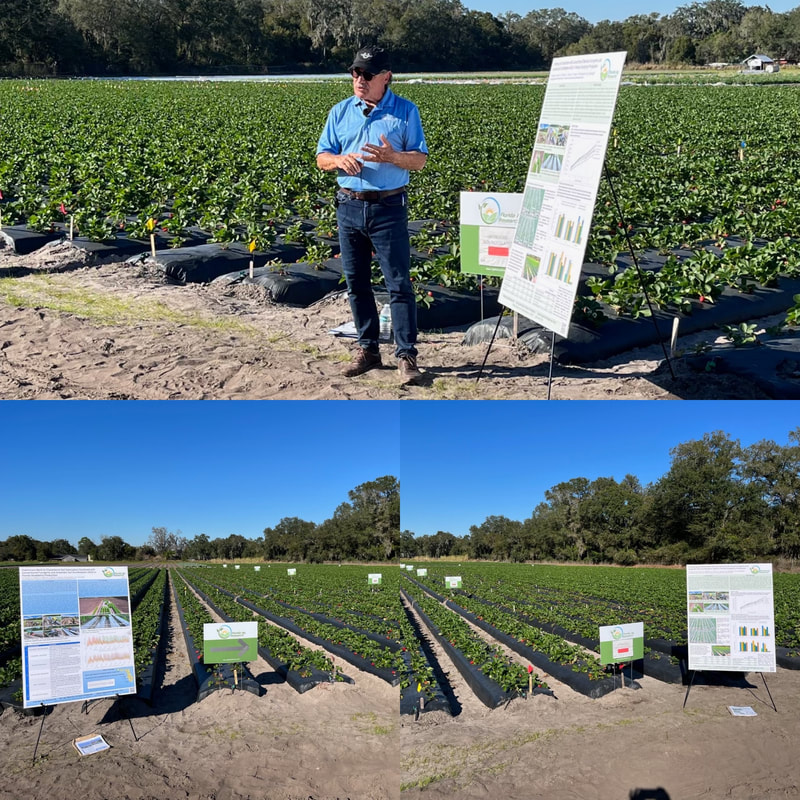
Trial strawberry beds at Florida Ag Research
Results: The abnormally cool temps in November and December delayed Chilli thrips establishment until mid-January at Dover. As a result, foliar populations remained very low for the first 5 weeks of the season and comparison of insecticide efficacy during crop establishment was not possible on leaves alone. However, beginning weekly in December, blooms were sampled along with foliage and Chilli thrips were recovered in low but quantifiable densities to compare treatments after plants had set and irrigations stopped.

Conclusions: Chilli Thrips populations were low in 2024, limiting the conclusiveness of insecticide efficacy data. However, evaluations based on Chilli thrips presence in blooms and fruit damage indicated that the systemic insecticides Imidacloprid and Cyantraniliprole demonstrated efficacy against both nymphs and adults. Although efficacy was demonstrated rates used for dip and drench treatments negatively impacted plant growth and delayed crop development. The use of insecticide plant dips and drip chemigation methods is not recommended currently due to potential phytotoxicity effects. None of the organic insecticides tested provided observable control under the conditions of this study. Further research is planned for Fall 2025 to determine safe and effective rates for soil-applied insecticides and to reassess efficacy under higher pest pressure.
We are grateful for the support of the Florida Strawberry Growers Foundation for this research project. Thanks to Dr. Sriyanka Lahiri for assisting with technician training and collaborating on this project.
Picture
Picture
Want to find out more, download the full PowerPoint Presentation.
DOWNLOAD

Explosive Two-spotted Spider Mite Outbreaks – Central Florida. Pest Update: February 2025

2/12/2025

 
Picture
Extremely high populations of Two-spotted Spider Mites are occurring in Central Florida as a result of unusually warm February temperatures. Populations are spreading in plant canopies, including flowers and fruit, causing significant economic losses to growers on many farms.
Two-spotted Spider Mite (Tetranychus urticae) is a persistent threat to the strawberry industry nationwide. Their hidden colonization of plant canopies, rapid reproduction, and ability to develop resistance to chemical treatments make them especially difficult to control. Strawberry growers face significant risks because spider mites damage plants by reducing photosynthesis, stunting growth, and feeding directly on fruit causing significant crop losses annually.
Picture
With higher than normal temperatures this past month, damaging populations have broken out across Central Florida strawberry plantings and growers are in need of effective solutions to mitigate this escalating threat.
Picture
In hard hit areas, extensive webbing can be seen on foliage which protects these pests from predators and control sprays. This characteristic coupled with the dense foliar canopy of strawberry plants makes control of this pest very difficult commercially.
Picture
This infested field near Duette, FL exemplifies severe stunting and plant mortality when populations develop early in the season.
Published data developed by Dr. Frank Sances of Ag Metrics Group has shown that an average of 10-15 mites per leaf can cause measurable plant damage and yield loss. The plants shown above have had 100 or more mites per leaf for weeks at a time.
Spider Mite Trials:
​Secure A Spot in Our Spring "Add-On" Program
Currently, we are planning the Spring 2025 program at our Dover, FL strawberry research station. If you have a conventional or alternative acaricide in development, our “add on” trial program has openings for additional entries. Foliar sprays, root drench application and drip irrigation methods are possible. Your product will be compared with industry standards for efficacy against eggs, nymphs and adult stages.  At this time of year, 2-3 applications are normally made to manage this pest.
​Join Our Spring Strawberry Program Today
The industry is searching for products that can help growers manage the area-wide outbreak and prevent further losses economically important crop. If your product has potential efficacy against spider mites, please give us a call while we are filling slots in our field trial program in Central Florida. The industry is searching for products that can help manage the area-wide outbreak and prevent losses to this economically important crop. Two-Spotted Spider Mite is extremely difficult to control on strawberries and there are few effective control measures available to growers. Field trialing your potential solution in these real-world conditions could benefit everyone involved. 
 
Please call Florida Ag Research Director, Dr. Balaji Aglave, directly at (813) 892-1104. You can also email him at [email protected] or Erin Downey at [email protected] to discuss these Florida trials now starting at our Strawberry Research Center in Dover, FL. For questions regarding field trials at any of our other stations nationwide including the California Strawberry research program also with lab and field two spotted spider mite trials please contact Brad Booker at [email protected]
<<Previous

    How can we help you?

    CAREERS - Click Here

    Archives

    November 2025
    October 2025
    September 2025
    May 2025
    February 2025
    January 2025
    October 2024
    September 2024
    August 2024
    April 2024
    February 2024
    January 2024
    November 2023
    August 2023
    February 2023
    January 2023
    October 2022
    June 2022
    January 2022
    July 2021
    June 2021
    May 2021

    Categories

    All
    Abamectin
    Ag Metrics Group
    Ag Research
    Agronomic Research
    Agronomy
    Almonds
    Anaerobic Soil Disinfestation
    APHIS PPQ/BRS Research
    APHIS-PPQ/BRS Research
    APHIS Quarantine
    Apples
    Azadirachtin
    Balaji Aglave
    Beauveria Bassiana
    Bioassay Services
    Biostimulants
    Brad Booker
    CA
    California Fog Belt
    Capsicul Oleoresin
    Charlie Boone
    Chilli Thrips
    Citrus Greening
    Controlled Environment Agriculture
    Crop Rotation Studies
    Custom Bioassay Protocol
    Cyantranilprole
    Dan Lawrence
    Disease Resistance Screening
    Entomology
    Entomology Bioassay
    Entomophagous Nematodes
    Erin Rosskopf
    Field Trials
    Five Points
    Florida Ag Research
    Florida Strawberry
    Foliar Diseases
    Frankliniella Occidentalis
    Frank Sances
    Fungicide Alternatives
    Fungicide Efficacy Testing
    Fungicide Resistance Monitoring
    Fungicide Resistance Testing
    Germplasm Disease Phenotyping
    GLP Services
    Grapes
    Greenhouse
    Greg Brittain
    High Density Apple Plantings
    High Pressure Fungal And Bacterial Test System
    HLB
    Huanglongbing
    Hydroponics
    Imidacloprid
    INS Virus
    Kaleb Williams
    Laboratory Bioassay
    Marja Koivunen
    Mark Keeley
    Methyl Bromide
    Michigan Ag Research
    Nematodes
    Nematology
    Neopestalotiopsis
    Neopestalotiopsis Rosae
    Organic
    Organic Growers
    Oscar Cuevas
    Ovicidal Efficacy
    Pacific Ag Research
    Panama Disease
    Pestalotiopsis
    Pyrethrum
    Pythium
    Samuel Sances
    San Joaquin Valley
    Scirtothrips Dorsalis
    SCN Assay
    Solarization
    Soybean Cyst Nematode Test
    Soybean Greenhouse Assay
    Strawberry
    Strawberry Disease
    Sudden Death Syndrome Soybean
    Sugarcane
    Sugarcane Brix
    Sugarcane Lodging Reduction
    Tar Spot
    Thrips
    Turf & Ornamental
    Two-spotted Spider Mite
    USDA
    Viticulture
    Western Flower Thrips
    Winter Bioassay
    Winter Greenhouse Research

    RSS Feed

Ag Metrics Group logo - Formerly Pacific Ag Group
(805) 594-1800 • [email protected]
1840 Biddle Ranch Road • San Luis Obispo • California 93401
Pacific Ag Research
Florida Ag Research
Michigan Ag Research
Entomology | Plant Pathology | Nematology | Agronomy | Precision Agriculture
Crops | About Us | Careers | Contact
A proud American-owned company since 1980
©2021 Ag Metrics Group, Inc. All Rights Reserved.
​Terms & Conditions | Privacy Policy | Accessibility